What Are Deepfakes? A Simple Guide Everyone Should Understand





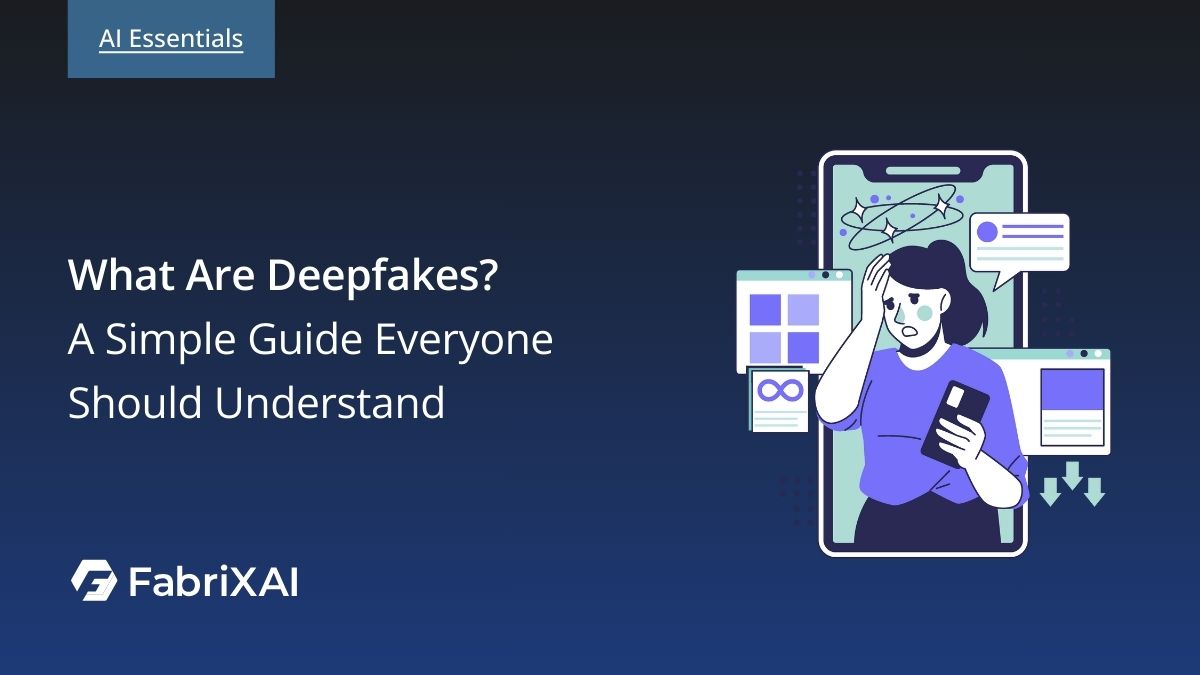
Artificial intelligence is changing how we create and consume digital content. Images, audio, and video can now be generated or altered in ways that were not possible just a few years ago. One term that is appearing more often in news, workplace discussions, and online conversations is deepfakes.
If you have heard the word but are not quite sure what it means, you are not alone. Deepfakes are often discussed in alarming ways, yet many people do not have a clear, practical understanding of what they are or why they matter.
This article explains what deepfakes are, how they typically appear, and why they have become a real issue for trust and security. The goal is not to create fear, but to build awareness and understanding so people can navigate AI-generated content more confidently.
What Does the Term Deepfake Mean
A deepfake is AI-generated media that makes a person appear to say or do something they never actually said or did. This can involve video, audio, images, or a combination of all three.
The term comes from deep learning, a type of artificial intelligence that learns patterns from large amounts of data, and fake, meaning the content is not authentic. By analysing photos, videos, or voice recordings of a real person, AI systems can generate new content that closely imitates their appearance or voice.
At first glance, deepfakes can look or sound real. That is what makes them powerful and potentially harmful.
Common Types of Deepfakes You May Encounter
Deepfakes do not appear in just one form. Understanding the most common types helps people recognise them more easily.
Fake Video
This is often what people think of first. A fake video may show a real person’s face placed into a different scene or speaking words they never said. Facial expressions, lip movements, and gestures can look convincing, especially in short clips.
These videos are sometimes shared as screen recordings, social posts, or private messages, which makes them harder to verify.
Fake Voice
Voice cloning is becoming increasingly accessible. With a short audio sample, AI can generate speech that sounds like a specific person. This can be used to create fake phone calls, voice notes, or audio messages.
Voice deepfakes are particularly risky because people tend to trust familiar voices, especially in urgent situations.
Fake Proof Content
Deepfakes are not always full videos or audio clips. Sometimes they appear as supporting material, such as screenshots, recordings, or short clips presented as proof. These are often used to pressure or trick someone into taking action quickly.
In many cases, the content is designed to feel urgent or authoritative, reducing the chance that the recipient will stop to question it.
Why Deepfakes Matter More Than Ever
Deepfakes are not just an internet curiosity. They have real-world consequences.
As AI tools improve, the cost and effort required to create convincing deepfakes continue to drop. This makes them accessible to a wider range of people, not all of whom have good intentions.
Deepfakes have already been used in scams, impersonation attempts, fake announcements, and misinformation campaigns. When people can no longer rely on what they see or hear, trust becomes harder to maintain.
This shift turns deepfakes into a security issue rather than just a content issue.
Where Deepfakes Are Commonly Used Today
Understanding where deepfakes show up can help people stay alert without becoming overly suspicious.
One common use is impersonation. Fake voice calls or video messages may appear to come from managers, colleagues, or family members, often requesting urgent action.
Another area is misinformation. Deepfakes can be used to create false statements or events that appear to involve public figures or organisations.
Deepfakes can also be used for harassment or reputational harm, making it appear as though someone said or did something inappropriate when they did not.
Not all deepfakes are malicious. Some are used for entertainment, education, or creative projects. The challenge is that intent is not always clear at first glance.
Why Seeing and Hearing Are No Longer Enough
For a long time, people relied on visual and audio cues to judge authenticity. A familiar face or voice felt like proof.
AI changes that assumption. A convincing video or voice clip can now be generated without the person ever being involved. This means trust based solely on appearance or sound is no longer sufficient, especially when sensitive information or decisions are involved.
This does not mean people should distrust everything. It means verification habits need to evolve alongside technology.
The Difference Between Awareness and Panic
It is important to separate awareness from fear.
Deepfakes are a real issue, but they do not mean that every video, call, or message is fake. Panic leads to paralysis or overreaction, which can be just as damaging as blind trust.
Awareness means understanding what deepfakes are, recognising when extra caution is needed, and knowing how to respond calmly and responsibly.
The Role of Platforms and Technology Providers
Deepfakes raise broader questions beyond individual behaviour.
As AI-generated content becomes more common, platforms and technology providers play an important role. Questions often raised include how AI-generated content should be labelled, how quickly harmful content should be removed, and what detection tools should be required.
These are complex issues with no single answer. They involve balancing innovation, free expression, privacy, and safety. Understanding deepfakes helps people engage more meaningfully in these conversations.
Responsibility and Accountability in a Deepfake World
Another important question is responsibility. If a deepfake causes harm, who is accountable.
Is it the person who created it, the platform that hosted it, or the organisation that failed to verify it. In reality, responsibility is often shared across multiple parties.
This is why responsible AI use is not only a technical issue but also a social and organisational one. Clear norms, policies, and education matter as much as detection tools.
What This Means for Everyday AI Users
You do not need to be a technical expert to understand deepfakes. Basic awareness goes a long way.
Knowing what deepfakes are, how they appear, and why they matter helps people pause before reacting. It encourages verification rather than blind trust or automatic dismissal.
In the next article in this series, we will focus on practical steps you can take to stay safe. That includes how to verify requests, protect personal data, and use AI responsibly without giving up its benefits.
Conclusion: Understanding Deepfakes Is the First Step
Deepfakes are a clear example of how AI can challenge long-standing assumptions about trust and authenticity. They are not just about fake videos or voices. They are about how technology reshapes how we judge information.
By learning what deepfakes are and why they matter, people are better equipped to respond thoughtfully rather than reactively. Awareness is the first step toward safety.
If you want to go deeper into responsible AI use, platform accountability, and practical protection strategies, explore the FabriXAI Responsible AI Hub. Stay smart, stay safe with AI.
Frequently Asked Questions About Deepfakes
Q1. What is a deepfake in simple terms?
A deepfake is AI-generated content that makes someone look or sound like they said or did something they never actually did.
Q2. Are all deepfakes harmful?
No. Some deepfakes are used for entertainment, education, or creative projects. The risk comes when they are used to mislead, impersonate, or cause harm.
Q3. How can deepfakes be used in scams?
Deepfakes can imitate voices or faces to pressure people into sending money, sharing codes, or acting quickly without verification.
Q4. Can deepfakes be detected easily?
Some deepfakes are obvious, but many are difficult to spot without context or verification. This is why relying on voice or video alone is no longer enough.
Q5. Why are deepfakes considered a security issue?
Deepfakes can undermine trust in communication, enable impersonation, and spread misinformation, which makes them a real risk for individuals and organisations.
Related Posts

Beyond the AI Experiment: Join FabriXAI to Explore Agentic AI in Action
AI Is Not a Source of Truth: How to Use AI Without Overtrusting It