AI Knowledge Management vs Search, Chatbots, and RAG: What Actually Solves the Enterprise Knowledge Problem?





Over the past few years, enterprises have invested heavily in tools that promise better access to information. Smarter search engines. Internal chatbots. AI-powered assistants. Retrieval-augmented generation systems, often called RAG. On paper, it feels like the enterprise knowledge problem should already be solved.
Yet employees still ask the same questions every day.
- Where is the right information?
- Which answer can I trust?
- Has this been solved before?
The issue is not a lack of technology. It is a misunderstanding of the problem itself.
Most tools focus on retrieval, not understanding. They help people find content, but they do not help organizations learn from it, connect it, or reason over it. To understand why AI knowledge management represents a different and more complete solution, we need to look closely at what search, chatbots, and RAG actually do, and where they fall short.
The Enterprise Knowledge Problem Is Often Misdiagnosed
When employees struggle to find answers, the default assumption is usually that search is not good enough. The response is predictable. Add another search layer. Improve indexing. Introduce a chatbot.
But the real problem is not access. It is fragmentation.
Enterprise knowledge lives across too many systems, formats, and contexts. Documents explain what should happen. Tickets show what actually happened. Chat messages capture decisions that were never documented. Over time, these pieces drift apart.
When knowledge is fragmented, better search only returns more fragments. Chatbots simply rephrase incomplete information. RAG systems retrieve text without understanding its relevance in a broader organizational context.
Solving the enterprise knowledge problem requires more than finding information. It requires connecting it.
Traditional Search: Finding Documents Without Context
Enterprise search has been around for decades. Modern versions are fast, scalable, and capable of indexing vast amounts of content. Yet frustration remains high.
The reason is simple. Search returns documents, not answers.
Employees must still open files, scan paragraphs, and interpret relevance themselves. Search does not understand why a document exists, how it relates to other information, or whether it is still valid.
Search works well when:
- The user knows what they are looking for
- The information is clearly named
- The context has not changed
Search breaks down when:
- The user does not know the right keywords
- Knowledge is distributed across systems
- Decisions and outcomes matter more than documents
Search is a useful tool, but it was never designed to create enterprise intelligence.
Chatbots: Conversational Access Without Intelligence
Chatbots feel like a leap forward because they replace keyword queries with natural language. Instead of searching, employees ask questions.
At first, this feels transformative.
But many enterprise chatbots are limited by the same underlying issue as search. They rely on fragmented, static knowledge sources. They do not truly understand the organization’s knowledge. They only summarize or rephrase what they retrieve.
This leads to several problems:
- Answers that sound confident but lack context
- Inconsistent responses across teams
- Difficulty explaining why an answer is correct
As organizations scale, trust erodes. Employees stop relying on the chatbot and revert to asking colleagues. The interface changed, but the intelligence did not.
RAG Systems: Better Retrieval, Same Core Limitation
Retrieval-augmented generation is often positioned as the solution to chatbot limitations. In simple terms, RAG systems retrieve relevant documents and use them to generate responses.
This improves relevance and reduces hallucinations. But it does not solve the core knowledge problem.
RAG systems still depend on the quality and structure of existing knowledge. They do not understand relationships across time, teams, or decisions. They retrieve information, but they do not reason over organizational experience.
RAG is a powerful component. It is not a complete knowledge strategy.
Without orchestration, RAG simply becomes a more advanced way to surface fragmented information.
AI Knowledge Management: From Retrieval to Understanding
AI knowledge management takes a fundamentally different approach. Instead of treating documents as isolated files, it treats them as sources of meaning.
AI systems analyze content across systems and identify:
- Topics and concepts
- Relationships between information
- Patterns across decisions, outcomes, and feedback
This creates a connected understanding of enterprise knowledge rather than a collection of searchable assets.
When employees ask questions, the system responds with context-aware insights. Not just where information exists, but what it means and how it relates to the current situation.
This shift from retrieval to understanding is what enables enterprise intelligence.
A Side-by-Side Comparison
The differences between these approaches become clearer when viewed side by side. The table below summarizes what each tool does well and where AI knowledge management goes further.
Most enterprises will use all of these elements. The difference lies in whether they are layered together with orchestration or deployed in isolation.
Why Orchestration Is the Missing Layer
The most overlooked concept in enterprise AI is orchestration.
Orchestration is what connects tools, knowledge, and context into a coherent system. It ensures that:
- Knowledge from different sources is linked
- Access respects roles and permissions
- Insights are consistent across teams
- Both humans and AI systems work from the same understanding
Without orchestration, organizations accumulate tools but not intelligence.
An AI Knowledge Orchestration Layer sits above existing systems. It does not replace search, chat, or RAG. It coordinates them, turning fragmented capabilities into shared intelligence.
What This Means for Enterprises Today
For enterprises evaluating AI tools, the key question should not be:
Which tool is best?
It should be:
What problem are we actually solving?
- If the goal is faster document discovery, search may be enough.
- If the goal is conversational access, chatbots help.
- If the goal is better retrieval, RAG adds value.
But if the goal is to reduce repeated mistakes, improve decisions, preserve organizational memory, and scale learning, AI knowledge management is essential.
Organizations that focus only on tools risk short-term improvements without long-term intelligence.
Turning Enterprise Knowledge into Intelligence with FabriXAI
As enterprises adopt multiple AI tools, orchestration becomes critical. This is where FabriXAI fits.
FabriXAI is designed as an AI Knowledge Orchestration Layer that connects existing systems, understands enterprise knowledge in context, and enables teams to access intelligence rather than just information.
By sitting above search, chatbots, and retrieval systems, FabriXAI helps organizations move from fragmented knowledge to shared understanding, without replacing the tools they already use.
If you want to explore how FabriXAI can help your organization solve the enterprise knowledge problem at its core, contact us to start the conversation.
Conclusion: Solving the Right Problem
The enterprise knowledge problem has never been about access alone. It is about understanding, connection, and learning at scale.
Search, chatbots, and RAG all play valuable roles. But without AI knowledge management and orchestration, they remain isolated solutions to a systemic challenge.
Organizations that recognize this difference will move faster, decide better, and scale smarter. Those that do not will continue adding tools while knowledge remains fragmented.
The future of enterprise intelligence starts by solving the right problem.
Frequently Asked Questions (FAQ)
1. Is AI knowledge management the same as enterprise search?
No. Enterprise search helps users find documents, while AI knowledge management focuses on understanding, connecting, and learning from information across the organization. It goes beyond retrieval to create shared intelligence.
2. How does AI knowledge management work with chatbots and RAG systems?
AI knowledge management does not replace chatbots or RAG. It orchestrates them by providing structured, contextual knowledge that improves answer quality, consistency, and trust across AI-powered interfaces.
3. Why do chatbots and RAG systems still struggle in enterprises?
They rely on fragmented and often outdated information. Without a unified understanding of enterprise knowledge, these tools can return incomplete or inconsistent answers, especially as organizations scale.
4. Do companies need to replace existing tools to adopt AI knowledge management?
No. AI knowledge management typically sits on top of existing systems. It connects and contextualizes current tools rather than replacing them, which lowers adoption effort and risk.
5. What business problems does AI knowledge management solve best?
It is most effective for reducing repeated mistakes, accelerating onboarding, improving decision-making, preserving organizational memory, and helping teams scale without knowledge chaos.
Related Posts
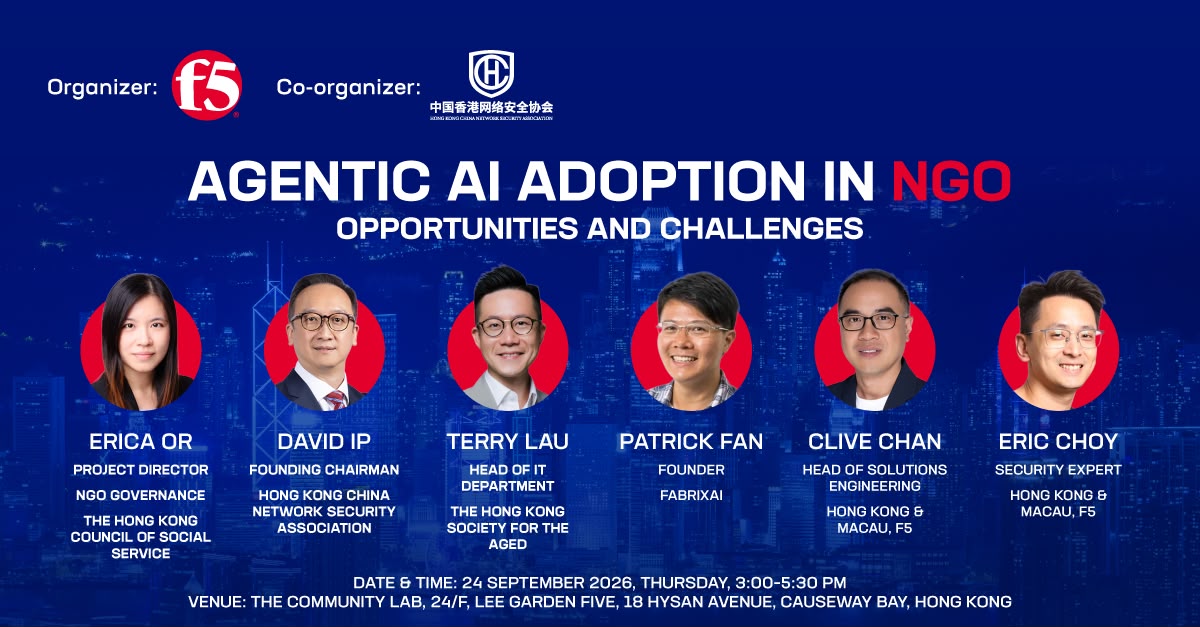
Beyond the AI Experiment: Join FabriXAI to Explore Agentic AI in Action
AI Is Not a Source of Truth: How to Use AI Without Overtrusting It